Has your driveway or patio become dirty,
Is it covered in black spot and other types of lichen?
Is it covered in moss, algae, mold and weeds?
Does it need a deep clean to restore back original colours?
Are you dreading spending a day or more pressure washing your paving?
Pressure washing may not be the answer. In many instances, it is not required. It can actually cause damage to the stone and paving. Perception is that high pressure jetting is the answer to clean hard surfaces.
Much of the discolouration is often due to natural biological organisms. These are known as biofilm and lichen. This comes in red, white, and the well-known “black spot”. Plus of course moss, algae. All of these can be pressure treated and washed away. However, you may cause damage to the stone in doing so. This is particularly the case in limestone and sandstone.
Sandstone is sedimentary. It is formed by layers of sand being compacted naturally. High pressure jetting can and will cause damage by breaking these layers. This leads to cracks or causes delimitation of the layers.
Mr Smiths are your local professional patio, driveway and exterior cleaning specialist, why not let us do it for you.
Introduce Soft Washing!
The Cause of the unsightly marks is the ‘bio film’. It is usually a cocktail of lichen, molds, and algae. This cocktail has been left to multiply and eventually cover the entire surface in things like black spot. Sometimes, this can cause damage to the surface. Algae and molds will definitely make the surface very slippery in the winter months! It can cause porous surfaces like sandstone or roof tiles to break up or crumble.
The Fix, pressure washing can undoubtedly remove most of this. It provides instant “satisfaction,” but it does not kill the organisms. These organisms are the root cause. So, it leaves a clean optimal condition for regrowth. Hence, we avoid pressure washing unless it is appropriate.
We will recommend the most appropriate method of cleaning. Soft washing is often one of them. It will not cause damage to any stone hard surface, whether man-made or natural. It will kill the cause, which is the bio film and its lichen chums. We use safe amounts of sanitiser and biocides during this process. The sanitiser kills the initial bio film and provides a quicker, cleaner look. The biocides remains to kill further. It helps break down the remaining lichen and also prevents it from returning.
We use longer-lasting and fully-licensed biocides chemicals that are fully approved by the UK Government and the HSE.
The Prevention Once clean, you have the choice to enter a clean and maintain program with us. We conduct annual or bi-annual treatments of the surface with biocides. This keeps the surface forever clean without needing to return to jet and pressure washing.
Services
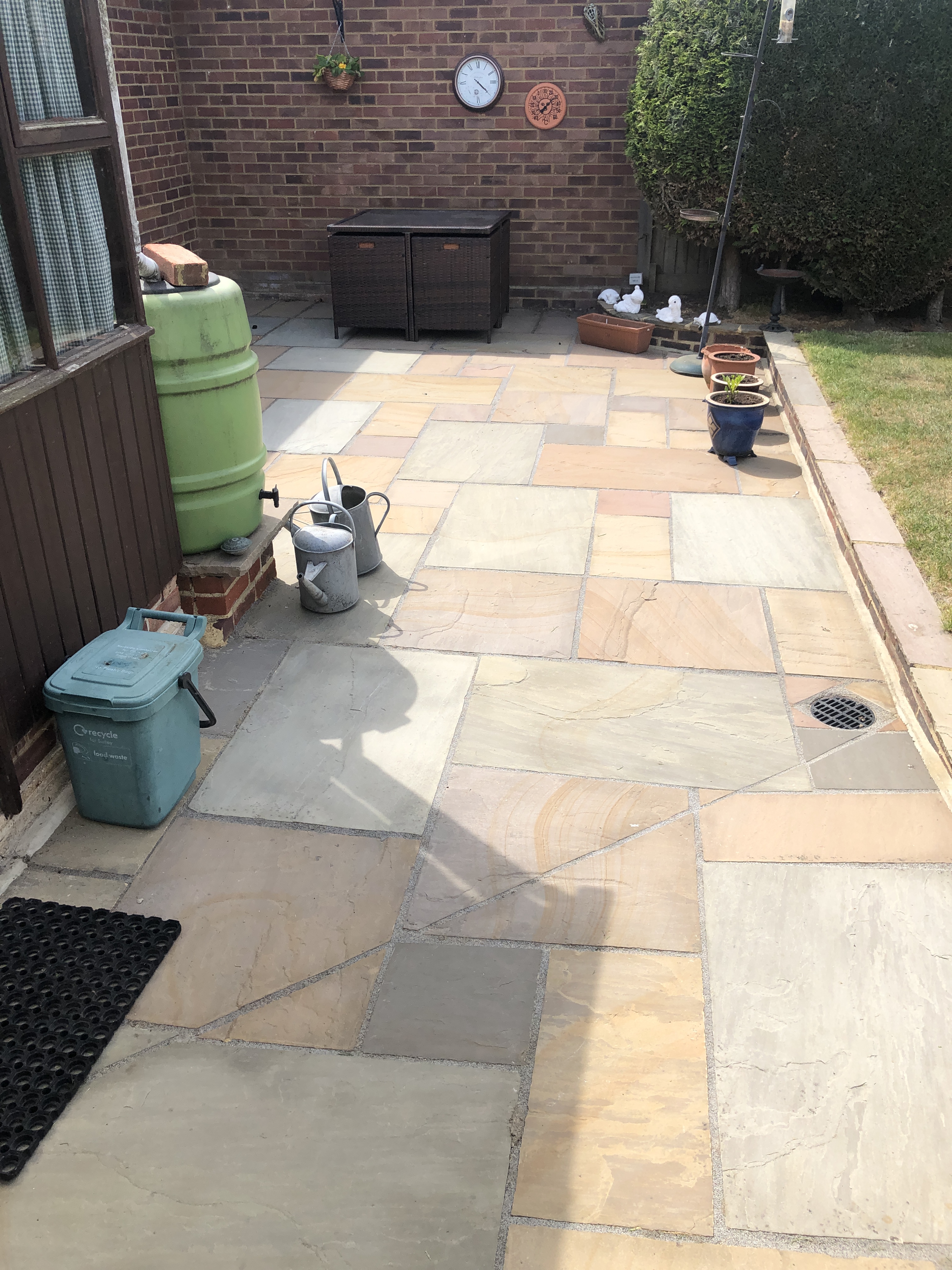
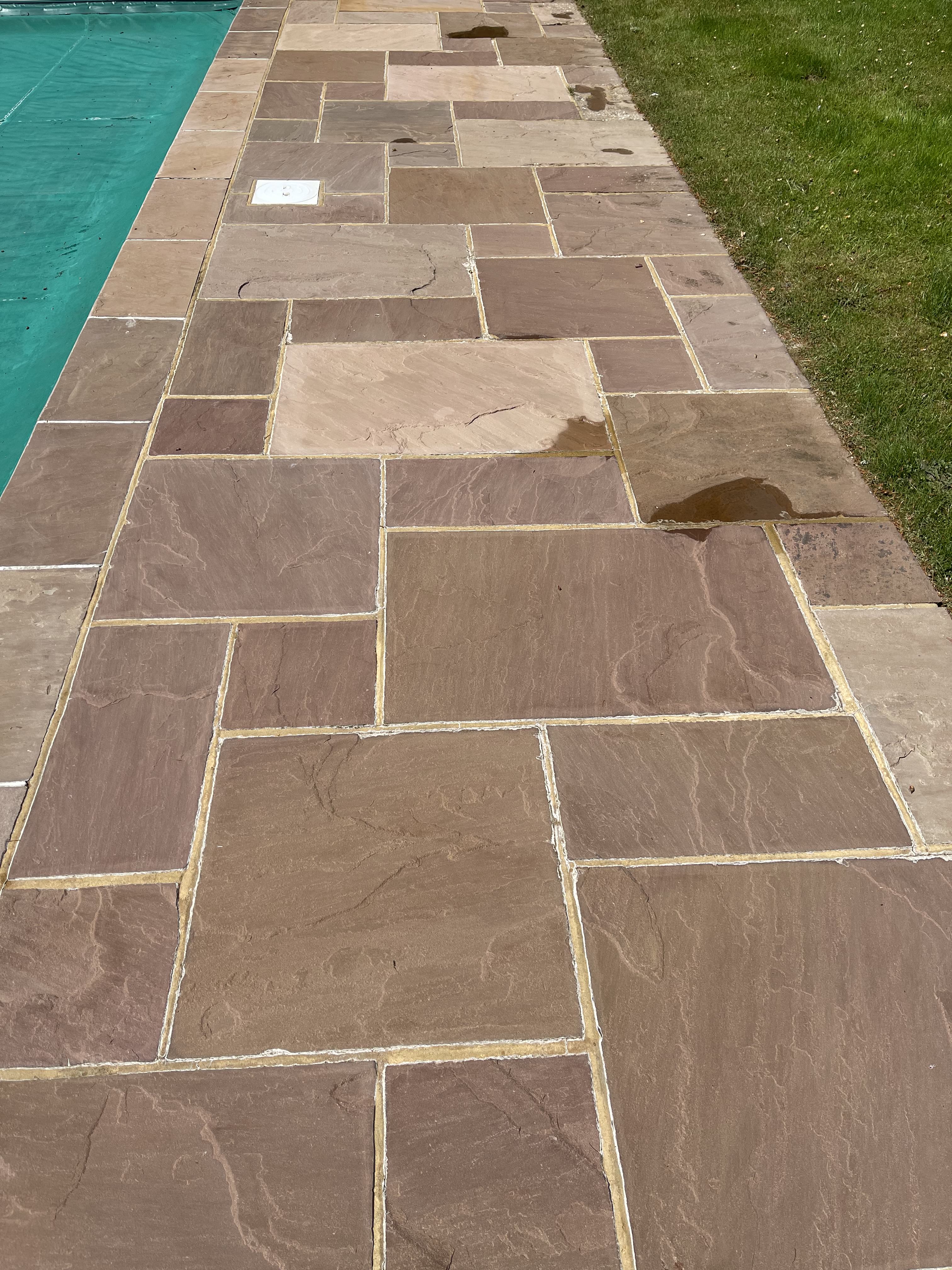
Before
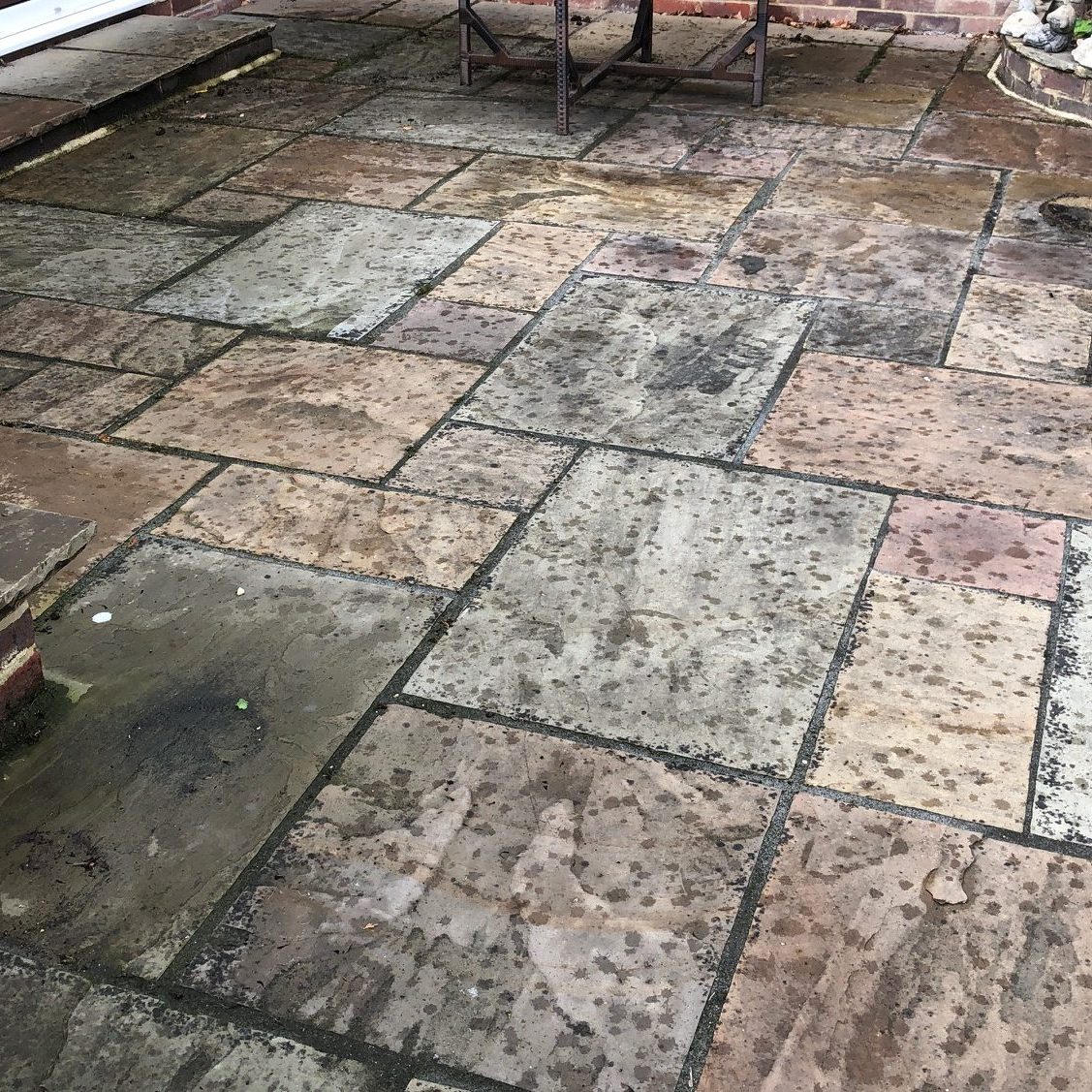
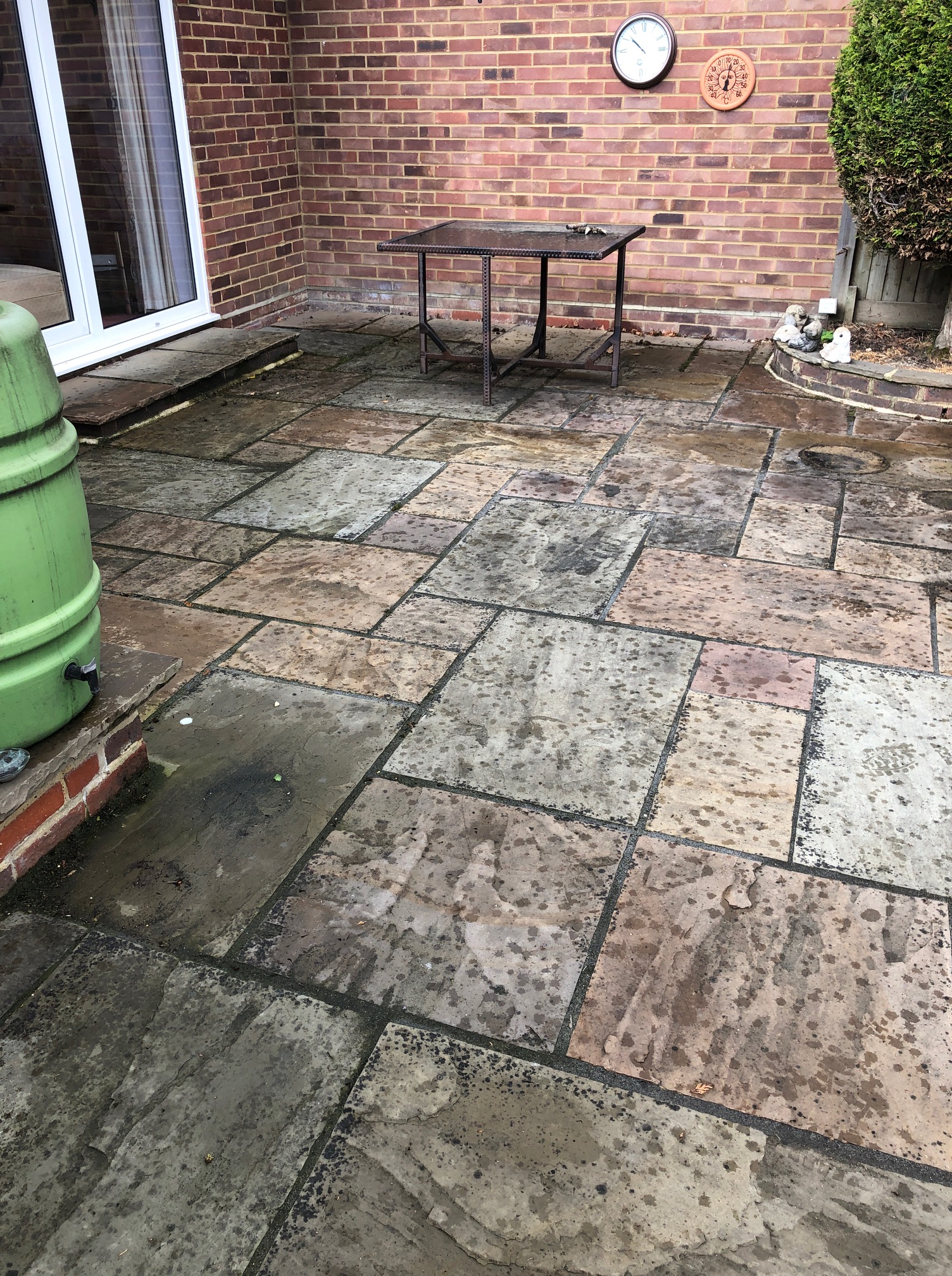
The bright colours of this Indian sandstone had faded. It is often purchased for those vibrant colours. It had become covered entirely with patio black spot and other bio films such as moss and lichen. The joints were also covered with green moss and algae, it wasn’t a nice place to site to enjoy.
After
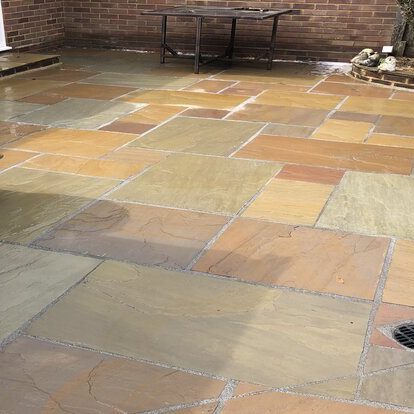
We used our licensed treatment to apply sanitiser and kill, cleaning the majority of the bio film. Then, we washed the surface down with just tap pressure. After that, we applied a licensed biocide solution. This further naturally cleanses the surface over the combining months and prevents return.
NO pressure washer was used in this clean.

The process
A Process proven for customer satisfaction.
We will use a Soft washing solution that contains a biocide. It targets and kills all mould, algae, fungi, and moss. This leaves a sanitised surface that deters any future spores from calling it home.
We will remove the need for heavy duty and potentially harmful power washing. Using our fully-licensed professional strength biocide, and sanitiser the soft washed surfaces show longer-lasting safer results.
The Biocides are fully UK government approved and biodegradable. Therefore, it will not change the pH of soils. Nor will it be residual in the soil. The solution’s pH neutralises once dry. It is safe for the environment when dry. This ensures the safety of pets and wild animals.
THE KIT
.
.
 Mr Smiths Gutter Clearance & Exterior Cleaning - Guildford